Copyrights and Copy Cats – A Paper Jam in Area B Is Not The Worst Thing That Can Happen To You

A publisher that sells educational materials has accused the Toledo Public School System of intentionally and willfully violating its copyright by either encouraging or allowing teachers to copy its training guides–supposedly verbatim–by transcribing them onto the school system’s computers then distributing thousands of them among the system’s teachers.

Align, Assess, Achieve LLC (“AAA”) sued the Toledo Ohio Public School System in Columbus Federal Court last Friday. AAA says the school district bought 10 copies of books in its series, Common Core: Clarifying Expectations for Teachers and Students, “apparently for the sole purpose of stealing and widely distributing the materials by having TPS teachers illegally transcribe these materials.”

AAA says that the books were sold pursuant to a license agreement, under which the school district was explicitly limited to using one “pacing guide” from the series for each kindergarten, first grade, and second grade math and English teacher. Despite these restrictions, the AAA determined in August of 2011 that the school system was not abiding by the license and, instead, “had engaged in massive infringement of the AAA copyrighted works.”

The complaint alleges as follows:  “Unbeknownst to AAA, TPS had engaged its teachers over the summer to take AAA copyrighted works and transcribe them – word for word – into electronic word processing documents. On information and belief, this massive copying of the AAA copyrighted works required numerous hours on behalf of TPS teachers and was done without any authorization by or knowledge of AAA.”

Obviously, these are merely allegations at this point. The school system has not had the chance to respond yet. However, this situation points out the need for everyone in your organization to understand the parameters of copyright and “fair use,” or, to put it another way, what you can copy and what you can’t. First rule of thumb: if it comes with a license, read the license and comply with it. If in doubt, don’t copy it. Second rule of thumb: if the license is unclear or there is no license, ask for permission before you copy. Don’t copy the work unless you have written permission to do so. Don’t assume that you can copy someone else’s work if you give them credit for it unless they have given you written permission to do so. In other words, giving attribution is not a defense to copyright infringement. Third, you may be able to copy portions of a copyrighted work (and in some rare cases, the whole work), assuming your copying would constitute fair use under the Copyright Act.

Generally, to qualify as fair use, you must be using the work for purposes of commentary, criticism, news reporting, and scholarly reports. While using portions of copyrighted works for educational use can sometimes qualify as fair use, the wholesale copying described in this complaint likely will not cut it, particularly when it destroys the commercial market for the product being sold. Despite what your brother-in-law told you, it is not true that the copying will automatically qualify as fair use if you use less than a certain percentage of the work or a specific number of words, or a certain number of musical notes–at least not under US law.  Whether a particular use qualifies as fair use depends on all the circumstances and, ultimately, can only be definitively decided by a federal court. I would encourage you and the entire Toledo School System to check out The U.S. Copyright Office’s Circular 21Reproductions of Copyrighted Works by Educators and Librarians. In addition, you can review this previous post for the big picture rules of fair use. While nobody wants to waste time reinventing the wheel, it sure beats being sued by an angry publisher seeking statutory damages and attorney fees in Ohio federal court.

New York Times and Huffington Post Reach Motherlode of a Settlement of Blog Dispute – Who Owns Your Blog?

The New York Times and the Huffington Post don’t seem to like each other very much. This particular dispute arose when well-known parenting blogger Lisa Belkin left the New York Time’s Motherlode blog and started writing a new blog for the Huffington Post called “Parentlode.” The Times sued for trademark infringement in New York district court back in November, stating:

“In drawing attention to the purported relationship between the blogs and offering the Parentlode blog as a continuation of NYTCo’s Motherlode blog, Ms. Belkin clearly intended to create an association in the minds of readers between the two competing blogs and, further, her reference to the ‘new name’ was a deliberate attempt to mislead readers into mistakenly believing it was the same blog, albeit with a slightly different name and location.”

The Huffington Post didn’t help matters when the tagged Ms. Belkin’s posts “Motherlode.” I think this case raises some interesting points. Does announcing a “new name” for the blog indicate that this is the same blog that used to be over at the Times but now it simply has a new home base? Are readers confused into believing that the two blogs are the same thing, just in a new location? Do people read blogs because of the newspaper or website that hosts them or because they enjoy the personal writing style and insights of the poster? We’ll never know how the New York district court would have come out on this or even what the parties ultimately decided among themselves because the parties have reached a confidential settlement. We do know that in a recent blog post, Ms Belkin got in some digs:

“Things can get petty and prickly in the sandbox. Sometimes there’s that kid who throws the sand around, and won’t share toys, and picks fights instead of playing nicely.

What is a parent to do?

Well, you can fight back, but the end result will probably just be more thrown sand. Or you can take your child by the hand, smile benignly at the bully, then go off to the ice cream shop and have a delightful afternoon.

Make mine chocolate chip.”

She went on to announce that the Huffington Post was launching a contest to rename the blog and the winner will receive a trip to New York, lunch with Arianna Huffington, and, “to show there were no hard feelings,”  a year’s digital subscription to the New York Times.

We will likely see more of these sorts of cases in the unstable journalism world, where new reporters are encouraged to “brand themselves” because they don’t know how long the paper they currently work for will survive. The BBC addressed a similar issue when a popular reporter left and took 60,000 Twitter followers to a new employer. Much like the Phonedog Twitter ownership case that everyone is talking about now, this case points out the necessity of making sure everyone involved in a creative endeavor knows who owns what. If a blog, Twitter account, Facebook page, or fill-in-the-blank is work-related, the employer needs clear policies and employment contracts that state in plain language that the account is the intellectual property of the employer so there is no controversy later. Conversely, if an individual employee blogs to “brand” herself, she should bargain on the front-end for ownership of the blog so that it is clearly portable if she later changes jobs. This simple step can mean the difference between spending countless days at your lawyer’s office rather than going “off to the ice cream shop and having a delightful afternoon.” Make mine jamocoa almond fudge.

Bits and Bytes

The Seven Habits of Spectacularly Unsuccessful Executives – Forbes

Amen to this. Why Best Buy is Going out of Business…Gradually – Forbes

iDoneThis helps you build better habits in the new year by connecting you with others who have the same goals.

How to Live a Creative Life – Martin Scorsese.

Richard Prince Lawsuit Focuses on Limits of Appropriation and Fair Use, via The New York Times.

Why 2012 will be year of the artist-entrepreneur.

Copyright and the 1st Amendment – How do they work together?

How Universities Fail Women Inventors – Businessweek.

This excellent post on Mashable.com was written by this blog’s friend and first guest star, Brian Wassom. 5 Predictions for Social Media Law in 2012.

This blog is honored to be mentioned in same breath with these women: Tip of The Tiara to Influential Women In Music 2012. Thanks, Janet!

Did the New Year sneak up on you? Watch my firm’s (Bass, Berry & Sims) New Year’s wish for you. See if you can spot me in the video. Hint: it was a curly hair day. And Happy New Year!

Trademark Poll: Do You Agree?

Does “Charbucks” dilute “Starbucks”? Answer: No. when all was said and done, Starbucks was unable to prove that there was a substantial likelihood that the “Mister Charbucks” mark would dilute the “Starbucks” mark by blurring. After looking at these pictures, it’s hard to believe this dispute has stretched out for more than 14 years.

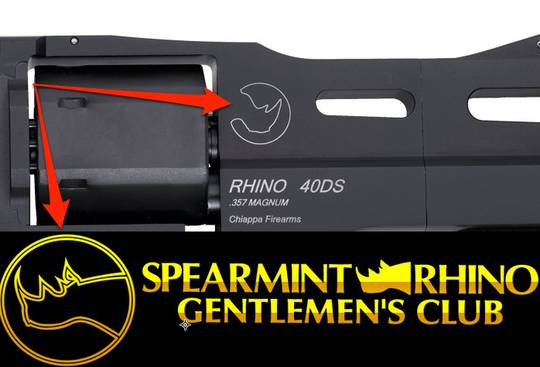
Does the use of a rhino head on handguns unfairly compete with the use of a rhino head on “gentlemen’s clubs”? Answer: No. The adult entertainment field and the manufacture of handguns are “vastly different” areas and the strip club owner couldn’t show any incidents of actual confusion or that “any reasonable consumer” was likely to be confused.

Does digitally adding recognizable pictures of the plaintiff’s furniture to an empty room in a TV show amount to trademark infringement? Answer: No. The plaintiff failed to allege or prove that the defendants competed in furniture design or marketing or that any member of the public would believe that the allegedly infringed  furniture pieces were designed or offered by defendants.

15 Provisions That Should Be In Your Employment Agreements if You Want to Keep Your Trade Secrets

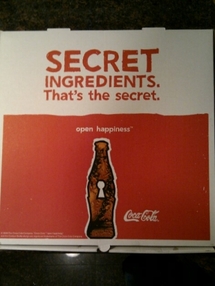
Image courtesy of Jeff Trexler

Your best and most reliable way to protect your trade secrets is by making sure that those that come into contact with your confidential information have a duty to keep it that way–a secret. As anyone who has ever completed middle school knows, not everyone is naturally good at keeping secrets. It is your job to make sure that the people who are privy to your business’ secrets know that the information is confidential and know that they are required to keep it that way. The foundation for setting these expectations and requirements is through written agreements and/or policies with your employees that clearly set out the employee’s responsibilities with regard to your confidential information.

As a threshold matter, tell your employees what information is considered to be confidential. Disclose that information only on a “need to know” basis. Require that employees participate in a confidential information awareness orientation (and, here’s the kicker, actually hold one and make them go). Put a “confidential” legend or watermark on confidential information and treat it that way. In addition, your employment agreements and/or handbooks should cover the following bases:

1.    Include enforceable covenants not to compete in your employment contracts that are reasonable in time and scope. Courts don’t really like these provisions and in most cases will only require the employee to do what is absolutely necessary to protect the employer’s interests and no more. So, if you want the non-compete to be enforceable later, draft it narrowly and make it reach only as far as necessary.

2.    Use non-use/nondisclosure provisions in your contracts that address the following:

a.    Incorporate by reference the Espionage Act (18 U.S.C. §1832). Note that this provision can only protect “actually confidential” information that is subject to reasonable efforts to protect confidentiality. Tax Track Systems v. New Investor World, Inc., 478 F.3d 783 (7th Cir. 2007).

b.    To secure the benefits of the CFAA (Computer Fraud and Abuse Act), use the language HP did in the following case, which proved to be critically important. Hewlett-Packard Co. V. BYD: Sign, Inc, 2007 WL 275476 at *11-13 (E.D. Tex. Jan. 25, 2007).The HP employees had agreed by contract to not disclose “any of HP’s intellectual property, trade secrets, and confidential information to any unauthorized persons, and to refrain from sending or accessing messages on HP’s computer systems for personal gain” (emphasis added). Consider going even further and get a covenant not to use the information in a manner contrary to the company’s business interests and define “personal gain” to include “personal non-economic benefit.

3.    Obtain a specific promise not to post secrets or confidential information on the internet. This becomes particularly important as we start moving to cloud-based applications that allow the employee to easily move information from your systems to the internet without the need for downloading or emailing documents.

4.    Have clear policies on what can be shared via social networking and blogging, etc.

5.    Obtain covenants not to solicit other employees in the event the employee changes jobs.

6.     Require anti-moonlighting provisions if appropriate.

7.    Include a contractual provision that requires the employee to assign to the employer any trade secrets or other intellectual property created by the employee in the course of the employment. Also, while you’re at it, make clear who owns what with respect to other intellectual property, i.e., business-related blogs, twitter accounts, and LinkedIn connections, etc.

8.    Obtain a requirement that employees return all company property upon separation, including any paper or electronic copies of company documents or other information.

9.    Specify Rules, either in a contract or in the employee handbook, for use of off-site digital storage devices.

10.    Require return/deletion of secrets from hard drives of digital storage devices used by the recipient. This provision would also include all the ways one can store data these days, i.e., on the employee’s cell phone, thumb drives, cameras, iPods, and the like.

11.    Insist upon a requirement that the employees submit to an exit interview.

12.    Require itemization of digital storage devices that have been used  to store your company’s trade secrets.

13.    Require that any disputes between the employer and employee be subject to mandatory arbitration (with an exception that allows you to seek an injunction for breach of these covenants if necessary).

14.    Have policies that protect confidential information with layered passwords, firewalls, intranets, file size restrictions on e-mailable documents, and encryption.

15.    Require one particular employee or IT consultant to check the internet regularly to monitor chat or other mentions of your company and protect its secrets. Early detection can limit damage.

Contractual Provisions with other Third Parties

Don’t just stop with your employees. Other people come into contact with your trade secrets too. Consider adding the following in agreements with other third parties:

1.    Companies that provide consulting services might consider “no-hire” clauses in contracts with its customers (such provisions must be narrowly drawn, though).

2.    Non-disclosure agreements with consultants or vendors who are likely to come into contact with confidential information or trade secrets. Consultants should be required to keep information confidential for some reasonable time period and then return or destroy the information.

3.    Negotiate for Protective Orders in Litigation with others.

4.    Always obtain a work made for hire agreement with consultants if at all possible.

5.    License Agreements must contain provisions which prevent the “naked” assignment of rights.

6.    Any shrink wrap agreements with users should prohibit the reverse engineering of your product and the posting of any secrets.

7.    Third Party Agreements should contain language advising the other party of their potential personal liability for misuse of the trade secrets by others if they in fact do disclose secrets.

Preventing the theft or inadvertent disclosure of trade secrets is far cheaper and more effective than litigating about these issues after the horse is out of the barn. Putting some thought into your contracts with your employees and third party vendors can help avert a disaster down the road.

Counterfeits: Louis Vuitton Sues Over Use of Fake Vuitton Luggage in ‘Hangover’ Film

LVMH Moet Hennessy Louis Vuitton SA (MC) sued Time Warner Inc. (TWX)’s Warner Brothers Entertainment unit for trademark infringement last week in New York federal court. Louis Vuitton, the famed luxury handbag and luggage maker, claims that a duffle bag used in the film “The Hangover: Part II”  was fake, despite the fact that Alan, the Zach Galifianakis character, refers to it as real. You can see a shot of Alan and his “Louis Vuitton” luggage here at the Clothes On Film blog. Louis Vuitton says that Alan’s “Careful, that’s a Louis Vuitton” line has become a popular catchphrase and that the movie has produced consumer confusion. Its lawsuit also claims that there has been gossip and Internet buzz about whether or not Alan’s bag is real.

But the complaint (posted in full here by Paid Content) alleges that the bag not genuine and is instead made by the Chinese American company Diophy, which Louis Vuitton is currently suing at the International Trade Commission in an attempt to prevent knock-off items from being sold in the U.S.

Vuitton states that it does authorize product placement in movies, but only with its permission and only with genuine products. According to Louis Vuitton, Warner is ignoring the general practice in the movie industry of clearing the use of a branded product with the brand owner.

In addition to an award of money damages, litigation costs and attorney fees, Louis Vuitton seeks an order barring the advertising, promotion and distribution of the film (as well as the destruction of all copies of the film) that contain any scenes with the allegedly infringing bag,

Despite being critically panned, the movie has certainly drawn a lot of litigation. In April, the tattoo artist who created Mike Tyson’s distinctive tattoo sued over the use of that design in the film. That case settled in June for undisclosed terms. In addition, an Australian stunt man who sustained physical injuries while filming a botched car chase scene also filed a suit against Warner Bros, as did a screenwriter who claimed his ideas were stolen and used in the movie’s script.

The duffle bag case is Louis Vuitton Malletier SA v. Warner Bros. Entertainment Inc., 1:11-cv-09436-ALC, U.S. District Court, Southern District of New York.

Hark! The Herald Angels Sing! (But Not Exactly How They Were Supposed To)

One of the things I love about my job is representing songwriters—the folks who serve as the creative engine of Music City. (A gratuitous aside: How do you get a songwriter’s attention in Nashville? A: “Hey, Waiter!”). Because I am attune to the problems songwriters face, i.e. pirating, infringement, illegal downloads, Spotify, the demise of the “album cut,” lousy tips, etc., I liked this story about one of the most prolific, most enduring songwriters of all time: Charles Wesley. If you’ve ever attended a protestant church or sang Christmas hymns, you are familiar with his work. In case his name doesn’t ring a bell, he is the writer of more than 6,000 songs (some say more than 8,000+), including such well-known hymns as “Christ the Lord is Risen Today!,” “Oh For A Thousand Tongues to Sing,” “Come Thou Long Expected Jesus,” and, probably most famously, “Hark the Herald Angels Sing.” Charles was also the brother of the founder of the Methodist church, John Wesley, and,despite his prolific songwriting, Charles was sometimes called “the forgotten Wesley.” Charles wrote his hymns as his method of teaching Christian doctrine to the poor and illiterate of his day.

At any rate, when Charles first wrote “Hark the Herald Angels Sing,” it was sung to the more somber tune of “Christ the Lord is Risen Today,” and instead of its iconic first verse, it went like this: “Hark! How all the Welkin Rings / Glory to the King of Kings.” But over time, many hands altered it so that morphed into something quite different than Wesley’s original vision for the song. George Whitefield, Wesley’s co-worker, changed the opening couplet to the one we sing today: “Hark! The Herald Angels Sing/ Glory to the Newborn King.” The second couplet was also rewritten and the tune was changed over the years, most notably by the English musician, William H. Cummings, who adopted a cantata composed by Felix Mendelssohn  to fit the lyrics of “Hark! The Herald Angels Sing,” thus turning Wesley’s more somber song into the joyous carol we sing today.

So what did Charles think of the fact that so many people changed his songs and lyrics, spawning derivative works that weren’t quite true to his original vision? We don’t know for sure but John Wesley wrote what could be considered a gentle but pointed cease and desist letter in the Preface to his 1780 Hymn Book (“A Collection of Hymns for the Use of the People called Methodists”):

And here I beg leave to mention a thought which has long been upon my mind, and which I should long ago have inserted in the public papers, had I not been unwilling to stir up a nest of hornets. Many gentlemen have done my brother and me (though without naming us) the honour to reprint many of our hymns. Now they are perfectly welcome so to do, provided they print them just as they are. But I desire they would not attempt to mend them ; for they really are not able. None of them is able to mend either the sense or the verse. Therefore, I must beg of them one of these two favours: either to let them stand just as they are, to take them for better for worse; or to add the true reading in the margin, or at the bottom of the page; that we may no longer be accountable either for the nonsense or for the doggerel of other men.

In other words, if you print our songs, give us credit and leave them alone….a sentiment not unlike that of many clients I represent today, although the songwriters I represent usually want a royalty and a co-pub deal as well. However, I wonder if we would still sing “Hark! The Herald Angels Sing” if Charles had been successful in keeping the song true to his more sedate vision. In effect, the “commercialization” of the song gave it a second wind that has allowed the song to endure more than 200 years, relaying the message of Christ’s birth to generation after generation. So raise a glass to Charles Wesley and to those infringing, derivative innovators that came after him as you sing your carols and celebrate this joyous season. I sure will. Happy holidays to you and yours.

Bits and Bytes

I hate to tell you this but your credit card info can be bought for mere dollars at an online “eBay-like” auction site for criminals.
Do you know how to check out an e-book from the library?

Why e-reading with your kid can impede learning.

Will the 9th Circuit reverse its decision that the Computer Fraud and Abuse Act applies to employees?

Five easy ways to get fired over your Facebook posts.

According to a federal judge in Maryland, Tweets are free speech, not cyberstalking, because unlike other types of stalking, tweets can be ignored.

Teens (and anyone else for that matter) can now report suicidal behavior of friends via Facebook chat where trained professional are available to help.

Facebook denied dismissal in “unwitting sponsors” class action. This case was brought by Facebook users who believe they should be compensated for endorsing products via Facebook’s “like” feature.

New Amazon Facilities Are Expected to Add 1300 jobs to Middle Tennessee.

Now that Amazon has reached an agreement with the State of Tennessee over the collection of sales tax, it has confirmed its plans to add two new facilities in Middle Tennessee–one in Murfreesboro and one in Lebanon. The new facilities are expected to add 1300 new jobs to the area. The retailer already has existing facilities in Hamilton and Bradley counties in East Tennessee. Under its new agreement with the state, Amazon will start collecting sales tax in Tennessee in 2014.

Wimpy Kid Stands Up to Zombie Kid

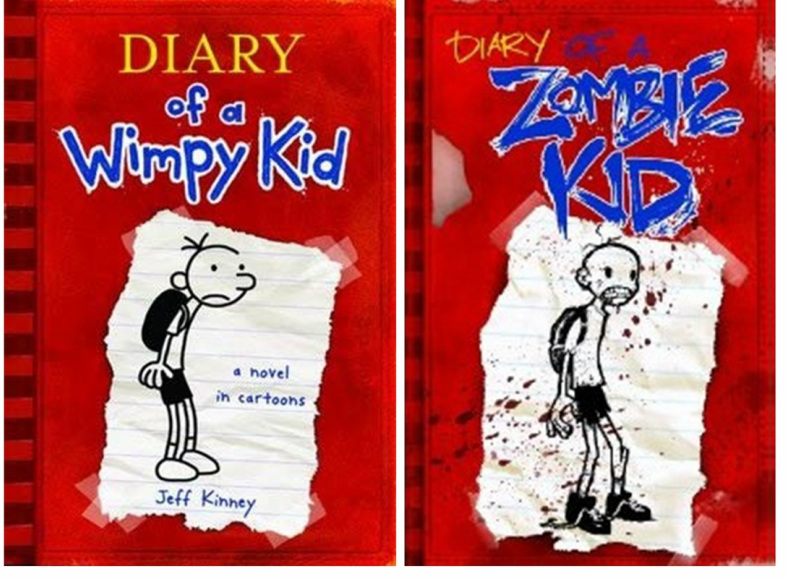
Wimpy Kid, Inc., the corporation that owns the trademarks and copyrights for the highly successful “Diary of a Wimpy Kid” series (“DOAWK”) filed suit in Massachusetts this week against Antarctic Press, a Texas company that is publishing a series called “Diary of a Zombie Kid.” Wimpy Kid’s complaint alleges trademark, trade dress, and copyright infringement, among other claims. Wimpy Kid is owned by Jeff Kinney, the author of the successful DOAWK series about a hapless kid surviving middle school. Over fifty-two million copies of the books have been sold in North America and each climbed to the top of the New York Times Bestseller list. Wimpy Kid has parlayed the success of the books into other branded merchandise, including clothing, toys, games, puzzles, and card games. The DOAWK series has also spawned two successful major motion pictures, which together have grossed more than $115 million in the United States alone. In addition to the six books in the series, Wimpy Kid and its publisher has written and marketed two editions of a book that accompanies the movies and two editions of a DOAWK themed do-it-yourself guide.

Antarctic Press published its book “Diary of a Zombie Kid” on or about August of 2011, which chronicles the misadventures of a middle schooler with a “zombie virus,” and is selling it nationwide through major retailers like Barnes and Nobles and Amazon.com. “Diary of a Zombie Kid” has also transported (or whatever zombies do) itself onto the New York Times bestseller list. According to Wimpy Kid, Antarctic Press has intentionally designed and titled its book, “Diary of a Zombie Kid” so that it looks just like the “Diary of a Wimpy Kid” series and consumers will be confused into thinking it is simply the latest offering from Wimpy Kid, Inc. The covers and spines of both series use similar colors, type styles, hand-drawn characters, and other artistic elements and, I have to admit, look a whole lot alike. Having had three kids that have loved the DOAWK series and having picked up these books lying around my house for the last five years or so, I am something of an lay expert on what they look like. In my admittedly unscientific poll of my children, they found the two covers to be confusingly close and said they would have assumed that Jeff Kinney wrote the zombie book too. No doubt the Zombie folks will counter with a parody defense and it remains to be seen if this will fly but the Wimpy Kid has made a pretty good opening salvo.