As If Wall Street Didn’t Have Enough Problems…

The Second Circuit issued what could be a significant blow to the one percent last week. Wall Street has been using the Economic Espionage Act (“EEA”) as an important weapon in its arsenal to protect its trade secrets against theft by rogue employees. For example, Goldman Sachs Group, Inc’s former programmer was convicted under the EEA of stealing Goldman’s confidential Continue reading

Another Cautionary Tale of Copyright Infringement: MergerMarket v. Cantor Fitzgerald

Here’s another case that points out the perils of copying and distributing content belonging to others. MergerMarket sued Cantor Fitzgerald and its managing director on Tuesday for copyright infringement. MergerMarket is a business news organization that provides its subscribers, mostly financial institutions, with the latest news and intelligence on mergers and acquisitions. According to MergerMarket’s Continue reading

Bits and Bytes

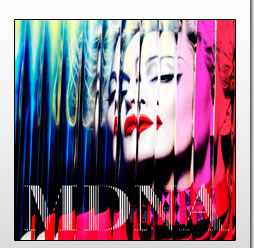
Madonna and “Girls Gone Wild“…Trademark Infringement or Publicity Stunt?

10 Tips for Creating a Social Media Policy for Your Business…

5 Simple Ways to Take Better Pictures, No Matter How Cheap Your Camera Is…

Do This Before You Get To The Fun Items on Your Bucket List…

Chattanooga, Tennessee Designs its Very Own Typeface….

7 Wildly Successful People Who Survived Bankruptcy

2011 Media Law Year in Review….

5 Reasons Teenagers Act the Way They Do….(Other Than the Fact That They Are Contractually Obligated to Do So…)


Who Wins the Race to Use A Trademark First?

In a shoot-off between two users of the same trademark, everything hinges on who used the mark first. It seems like this would be a simple determination: whoever can show that he or she used the mark first in commerce wins. Case closed. Like most things in the law, it is not quite that cut and dried. In order to establish that you are the senior user of a mark, you not only have to show that you used the mark first in commerce, you have to show that your use was “systematic and continuous.” People commonly assume that “continuous” means that you used the mark and you have never abandoned use of the mark. Because “abandonment” means non-use of a mark for some period of time (usually three years but can be shorter under some state statutes) with an intent not to resume use, most people think the “continuous” element is a lost cause when trying to attack another’s user’s seniority. However, an absence of abandonment is not the standard when determining whether the first one to use the mark made systematic and continuous use of it. Instead, in this context, “continuous” means “use without significant interruption.” 5 J. Thomas McCarthy on Trademarks, § 26:55 (2008) citing Casual Corner Associates, Inc. v. Casual Stores of Nevada, Inc., 493 F. 2d 709 (9th Cir. 1974) (non-use for one year was not “continuing” use).

Continue reading

Social Media Explained For the Newbie

This pretty much sums it up, folks. Let me know if you have any questions.

The Blog Got a Makeover

I’ve been working on improving the blog which meant moving to a different host. Please bear with me while I’m working out the bugs. I have heard from a number of folks that the RSS link doesn’t work and I’m trying to sort that out. I really appreciate the number of nice emails that I’ve received about the blog and  the folks that are reading it. I hope you like the improvements. Paige

Knox County School System Trademarks High School Mascots and Logos to Create a Valuable Revenue Source

Picture

The Knox County School System has invested in trademarking the school names and logos of its 12 high schools, tapping a source of revenue that was not previously available. According to school superintendant Jim McIntyre, the school district realized that others were selling merchandise emblazoned with its school mascots, etc., and the district was not being compensated for those uses. The district has registered its marks and entered into a licensing deal with Strategic Marketing Affiliates in order to monetize the trademarks. The district has already received its first royalty check for $940 from merchandise sold at Walgreens. This is not an insignificant amount for many cash-strapped school systems. Is your school system passing up badly-needed funds because it hasn’t protected and policed its valuable intellectual property?

Garth Brooks wins Suit Against Hospital Who Failed to Name Hospital After his Mother

An Oklahoma hospital that failed to build a women’s health center in honor of Garth Brooks’ late mother must pay the superstar singer $1 million, so sayeth a jury of Oklahoma country music fans.

Last night, the Oklahoma jury found in favor of Garth and decided that that the hospital must return Brooks’ $500,000 donation as well as pay him an additional $500,000 in punitive damages. The decision came in Brooks’ breach-of-contract lawsuit against Integris Canadian Valley Regional Hospital in Yukon, Oklahoma, which is, incidentally, located on Garth Brooks Blvd. It was Garth’s position that he’d reached a deal with the Hospital’s president for the “naming rights” of the new health center in exchange for his 2005 donation. After taking the donation, the Hospital wanted to use the money for other construction projects. Garth sued and, in a move that can only be described as “ill-advised,” the Hospital let this case go to a jury.

I freely admit I don’t know anything about the legal specifics of this case and I would be curious to know if punitive damages are in fact available for breach of contract claims in Oklahoma. However, regardless of the strength of its legal claims, the Hospital should have resolved this mess before throwing it in the lap of the Honkey-Tonk Bar Association.  Everybody knows that Garth has Friends in Low Places and that an Oklahoma jury is going to find in favor of one of its favorite sons, especially when he’s donated big money to honor his late momma and especially when his country music star wife (the fabulous Trisha Yearwood) is sitting by him in the courtroom. And, while $1,000,000 (plus its own attorney fees) is certainly a lot of money, I bet the bigger cost is the damage to the Hospital’s brand. The Hospital comes off as an untrustworthy welcher in a case that has (unsurprisingly) recieved national attention. How many folks are going to be willing to make substantial donations to them at this point? While I guess it’s possible that Garth refused to settle this case and, as plaintiff, that would be his right, the Hospital should have sat down with Garth over a few Long-neck Bottles and worked this out. I bet Garth is presently on a beach somewhere with Trisha, yodeling out an “I told you so,” with Two Pina Coladas, one for each hand. After all, this isn’t his first Rodeo.

Tennessee Senators Alexander and Corker Signal Willingness to Back Off SOPA/PIPA as Currently Written

Edit | Settings | Delete
Picture

In case you’ve been living in a cave, parts of the Internet went radio silent yesterday in protest of SOPA ( the “Stop On-Line Piracy Act”). Google “censored” its own logo and Wikipedia went down completely as expressions of these Internet giants’ opposition to the bill.  Due to all the brouhaha, U.S.  Senators from Tennessee, Bob Corker and Lamar Alexander issued statements on Wednesday that basically cried “uncle” and indicated that they are open to revising the controversial anti-piracy legislation that touched off the blackout and Internet firestorm. The two Tennessee Republicans are cosponsors of the Protect IP Act (“PIPA”)(the House version of the bill is SOPA), which would prevent US Internet users from accessing foreign-based rogue websites that illegally copy or show films, recordings, and other intellectual property.

The SOPA and PIPA bills would try to snuff out these overseas piracy sites by exerting leverage on companies doing business in the United States that would be subject to US jurisdiction. For example, the acts would force American ISPs to block the domain names (for example, “piracy.com”) of overseas piracy sites. They’d allow the government to sue American sites like Google and Facebook, and even blogs, to remove links to the piracy sites. And they’d give the government the right to cut off the piracy sites’ funding, such as forcing American payment companies (like PayPal) and advertisers to cut off the foreign accounts. Most of the opposition stems from fears that the ISP’s would be subject to liability for accidentally hosting pirated content or legitimate sites could be taken down by mistake without sufficient due process and their only recourse would be expensive litigation after their business has been destroyed by an improper take-down.

The protest has had its desired effect. The bill’s sponsors are backing off the legislation in its current form. Although Corker is a sponsor of the Senate bill, “he has always understood that there remained issues to be resolved before Protect IP was ready to become law,” said his chief of staff, Todd Womack.

“Though the bill being considered will likely not come to a vote in its current form, he hopes ongoing negotiations result in legislation that also stops foreign websites dedicated to stealing and profiting off the intellectual property of Americans, protects free speech, and fosters commerce and innovation on the Internet,” Womack said.

Alexander issued a similar statement.

“I am a cosponsor of the Protect IP Act because it will protect the rights of musicians, artists, and others from illegal foreign websites dedicated to copyright infringement,” the senator said. “I look forward to improving the bill to address legitimate concerns raised about it.”

Because Tennessee is home to the “Third Coast,” and “Music City,” Tennessee legislators are understandably supportive of measures to protect the IP of its many musicians, artists and film makers. Hopefully Senators Alexander and Corker will be able to fashion legislation that will take into account the concerns of the bills’ opponents, while still discouraging and punishing the infringers, counterfeiters, and pirates. It will be interesting to see what happens next. Many people are proposing alternative approaches. But for now, SOPA, at least in its current form, is as dead as Wikipedia was yesterday afternoon when I needed a quick and dirty survey of Anti-Slapp legislation.

The Velvet Underground vs. The Andy Warhol Foundation – Be Careful What You Wish For

Picture

The Andy Warhol Banana Image and the iPad cover licensed by the Foundation
The Velvet Underground ( an iconic rock group from the 1960’s for those of you who have never lived in a world without MTV) has filed a trademark and unfair competition lawsuit in Manhattan federal court against the Andy Warhol Foundation for the Visual Arts stemming from the Foundation’s use of the iconic banana image that was on the cover of the Velvet Underground’s 1967 debut album, The Velvet Underground and Nico. Band leaders Lou Reed and John Cale take the position that the foundation has illegally licensed the image for use on various products, including iPad cases. Cale and Reed allege that the foundation is trying to “deceive the public” into believing that the band, “VU,” has given its “sponsorship or approval” to this merchandise.The complaint seeks damages for trademark infringement and unfair competition and makes this statement to support its unfair competition claims: “Inasmuch as the Warhol Foundation has such a large number of Andy Warhol designs, all of which are presumably unique works that are highly valued in the marketplace, there would appear to be no economic need to include the banana design among the designs that defendant licenses.” In other words, since there are a lot of other Warhol designs the Foundation could choose to commercialize, the fact that it selected this particular one proves that the defendant is trading on the goodwill of the Velvet Underground.

Andy Warhol did more than paint Campbell soup cans and hang out with Edie Sedgwick during the 1960’s. He was also serving as the Velvet Underground’s manager and producer, and he created the famous banana logo – which includes the phrase “peel slowly and see” – from an advertisement taken from the public domain. Warhol was paid part of the band’s label advance for the design but never registered the image with the US Copyright Office. While this could theoretically mean that Warhol and now the Foundation have common law copyrights in the design, the Complaint denies that this is the case. The Velvet Underground says the Warhol Foundation lost any claim to the image by repeatedly publishing it without a copyright notice.

“The Warhol Foundation has sought to justify its unlawful licensing activities involving the mark by asserting that it has a copyright interest in the banana design, despite the incontrovertible fact that the banana design, insofar as copyright rights are concerned, is in the public domain,” the complaint states. “The banana design was first published in 1967, and continuously and repeatedly afterwards, without any copyright notice, and neither Andy Warhol, the Warhol Foundation, nor anyone else, has applied for registration of any copyright or deposited any sample of the work with the Copyright Office. Under the applicable copyright law – which is the Copyright Act in effect from July 1, 1909 through December 31, 1977 (the ‘1909 Act’) – such publication without a copyright notice irrevocably placed the banana design in the public domain, if it was not there already.”

In addition to seeking unspecified damages, the Plaintiff wants a declaratory judgment that the Foundation has no copyright in the Warhol image.

As far as I can tell, the Velvet Underground never obtained a federal trademark registration for the cover and the Complaint does not allege that they have. If that’s the case, they only have common law trademark rights. While you can certainly still sue under the Lanham Act without a registration, I have always believed that judges and juries are bound to wonder, “if this mark is so valuable, why didn’t you register it?” In other words, it makes it hard to convince folks that there is irreparable harm happening, in my humble opinion. Regardless of whether there is or is not a registration, the VU is going to have to establish that there is a likelihood of confusion with its marks and the usage the Foundation is making, i.e., on iPad covers. The complaint alleges that the VU mark has been used in connection with live musical performances, vodka, and VU merchandise. Consequently, I’m not sure how the VU is going to establish that it has rights that extend into the arena of iPad covers. Are consumers likely to believe that iPads emanate from the same source as live musical performances and vodka?  I would think not.

If the design is in the public domain, as the plaintiff alleges, can’t anyone use it on goods to which the plaintiff’s common law trademark does not extend? While I think the Velvet Underground will likely be able to establish trademark usage and secondary meaning in the album cover, I don’t think they are going to be able to extend it as far as they want it to go. If this is the case, it may be a mistake to seek a declaration that the Warhol banana design is in the public domain. If the plaintiff receives a holding that the image is in the public domain, then anyone would be able to use it on any product that would not be likely to be confused with live musical performances, vodka, and VU. At least if they are only fighting the Warhol Foundation, they know they are dealing with a reputable outfit that is likely to only license the mark on “appropriate” goods. And, the foundation would have the motive and means to police copyright infringements of it. If I were the VU, I would shudder to think what products this public domain “banana” with the possibly suggestive slogan “peel slowly and see” could be applied to in the event it is determined to be in the public domain and how much in legal fees it would take to constantly address that. Hey, people need something to sell on all those new .XXX domains.

The case is The Velvet Underground v. The Andy Warhol Foundation for the Visual Arts, 12-0201, U.S. District Court, Southern District of New York (Manhattan).