Category Archives: Trademarks

Knox County School System Trademarks High School Mascots and Logos to Create a Valuable Revenue Source

Picture

The Knox County School System has invested in trademarking the school names and logos of its 12 high schools, tapping a source of revenue that was not previously available. According to school superintendant Jim McIntyre, the school district realized that others were selling merchandise emblazoned with its school mascots, etc., and the district was not being compensated for those uses. The district has registered its marks and entered into a licensing deal with Strategic Marketing Affiliates in order to monetize the trademarks. The district has already received its first royalty check for $940 from merchandise sold at Walgreens. This is not an insignificant amount for many cash-strapped school systems. Is your school system passing up badly-needed funds because it hasn’t protected and policed its valuable intellectual property?

Garth Brooks wins Suit Against Hospital Who Failed to Name Hospital After his Mother

An Oklahoma hospital that failed to build a women’s health center in honor of Garth Brooks’ late mother must pay the superstar singer $1 million, so sayeth a jury of Oklahoma country music fans.

Last night, the Oklahoma jury found in favor of Garth and decided that that the hospital must return Brooks’ $500,000 donation as well as pay him an additional $500,000 in punitive damages. The decision came in Brooks’ breach-of-contract lawsuit against Integris Canadian Valley Regional Hospital in Yukon, Oklahoma, which is, incidentally, located on Garth Brooks Blvd. It was Garth’s position that he’d reached a deal with the Hospital’s president for the “naming rights” of the new health center in exchange for his 2005 donation. After taking the donation, the Hospital wanted to use the money for other construction projects. Garth sued and, in a move that can only be described as “ill-advised,” the Hospital let this case go to a jury.

I freely admit I don’t know anything about the legal specifics of this case and I would be curious to know if punitive damages are in fact available for breach of contract claims in Oklahoma. However, regardless of the strength of its legal claims, the Hospital should have resolved this mess before throwing it in the lap of the Honkey-Tonk Bar Association.  Everybody knows that Garth has Friends in Low Places and that an Oklahoma jury is going to find in favor of one of its favorite sons, especially when he’s donated big money to honor his late momma and especially when his country music star wife (the fabulous Trisha Yearwood) is sitting by him in the courtroom. And, while $1,000,000 (plus its own attorney fees) is certainly a lot of money, I bet the bigger cost is the damage to the Hospital’s brand. The Hospital comes off as an untrustworthy welcher in a case that has (unsurprisingly) recieved national attention. How many folks are going to be willing to make substantial donations to them at this point? While I guess it’s possible that Garth refused to settle this case and, as plaintiff, that would be his right, the Hospital should have sat down with Garth over a few Long-neck Bottles and worked this out. I bet Garth is presently on a beach somewhere with Trisha, yodeling out an “I told you so,” with Two Pina Coladas, one for each hand. After all, this isn’t his first Rodeo.

The Velvet Underground vs. The Andy Warhol Foundation – Be Careful What You Wish For

Picture

The Andy Warhol Banana Image and the iPad cover licensed by the Foundation
The Velvet Underground ( an iconic rock group from the 1960’s for those of you who have never lived in a world without MTV) has filed a trademark and unfair competition lawsuit in Manhattan federal court against the Andy Warhol Foundation for the Visual Arts stemming from the Foundation’s use of the iconic banana image that was on the cover of the Velvet Underground’s 1967 debut album, The Velvet Underground and Nico. Band leaders Lou Reed and John Cale take the position that the foundation has illegally licensed the image for use on various products, including iPad cases. Cale and Reed allege that the foundation is trying to “deceive the public” into believing that the band, “VU,” has given its “sponsorship or approval” to this merchandise.The complaint seeks damages for trademark infringement and unfair competition and makes this statement to support its unfair competition claims: “Inasmuch as the Warhol Foundation has such a large number of Andy Warhol designs, all of which are presumably unique works that are highly valued in the marketplace, there would appear to be no economic need to include the banana design among the designs that defendant licenses.” In other words, since there are a lot of other Warhol designs the Foundation could choose to commercialize, the fact that it selected this particular one proves that the defendant is trading on the goodwill of the Velvet Underground.

Andy Warhol did more than paint Campbell soup cans and hang out with Edie Sedgwick during the 1960’s. He was also serving as the Velvet Underground’s manager and producer, and he created the famous banana logo – which includes the phrase “peel slowly and see” – from an advertisement taken from the public domain. Warhol was paid part of the band’s label advance for the design but never registered the image with the US Copyright Office. While this could theoretically mean that Warhol and now the Foundation have common law copyrights in the design, the Complaint denies that this is the case. The Velvet Underground says the Warhol Foundation lost any claim to the image by repeatedly publishing it without a copyright notice.

“The Warhol Foundation has sought to justify its unlawful licensing activities involving the mark by asserting that it has a copyright interest in the banana design, despite the incontrovertible fact that the banana design, insofar as copyright rights are concerned, is in the public domain,” the complaint states. “The banana design was first published in 1967, and continuously and repeatedly afterwards, without any copyright notice, and neither Andy Warhol, the Warhol Foundation, nor anyone else, has applied for registration of any copyright or deposited any sample of the work with the Copyright Office. Under the applicable copyright law – which is the Copyright Act in effect from July 1, 1909 through December 31, 1977 (the ‘1909 Act’) – such publication without a copyright notice irrevocably placed the banana design in the public domain, if it was not there already.”

In addition to seeking unspecified damages, the Plaintiff wants a declaratory judgment that the Foundation has no copyright in the Warhol image.

As far as I can tell, the Velvet Underground never obtained a federal trademark registration for the cover and the Complaint does not allege that they have. If that’s the case, they only have common law trademark rights. While you can certainly still sue under the Lanham Act without a registration, I have always believed that judges and juries are bound to wonder, “if this mark is so valuable, why didn’t you register it?” In other words, it makes it hard to convince folks that there is irreparable harm happening, in my humble opinion. Regardless of whether there is or is not a registration, the VU is going to have to establish that there is a likelihood of confusion with its marks and the usage the Foundation is making, i.e., on iPad covers. The complaint alleges that the VU mark has been used in connection with live musical performances, vodka, and VU merchandise. Consequently, I’m not sure how the VU is going to establish that it has rights that extend into the arena of iPad covers. Are consumers likely to believe that iPads emanate from the same source as live musical performances and vodka?  I would think not.

If the design is in the public domain, as the plaintiff alleges, can’t anyone use it on goods to which the plaintiff’s common law trademark does not extend? While I think the Velvet Underground will likely be able to establish trademark usage and secondary meaning in the album cover, I don’t think they are going to be able to extend it as far as they want it to go. If this is the case, it may be a mistake to seek a declaration that the Warhol banana design is in the public domain. If the plaintiff receives a holding that the image is in the public domain, then anyone would be able to use it on any product that would not be likely to be confused with live musical performances, vodka, and VU. At least if they are only fighting the Warhol Foundation, they know they are dealing with a reputable outfit that is likely to only license the mark on “appropriate” goods. And, the foundation would have the motive and means to police copyright infringements of it. If I were the VU, I would shudder to think what products this public domain “banana” with the possibly suggestive slogan “peel slowly and see” could be applied to in the event it is determined to be in the public domain and how much in legal fees it would take to constantly address that. Hey, people need something to sell on all those new .XXX domains.

The case is The Velvet Underground v. The Andy Warhol Foundation for the Visual Arts, 12-0201, U.S. District Court, Southern District of New York (Manhattan).

Trademark Poll: Do You Agree?

Does “Charbucks” dilute “Starbucks”? Answer: No. when all was said and done, Starbucks was unable to prove that there was a substantial likelihood that the “Mister Charbucks” mark would dilute the “Starbucks” mark by blurring. After looking at these pictures, it’s hard to believe this dispute has stretched out for more than 14 years.

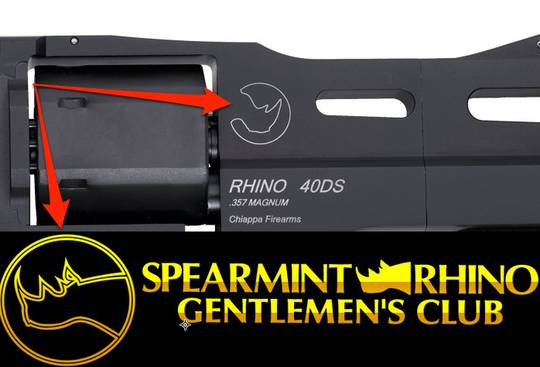
Does the use of a rhino head on handguns unfairly compete with the use of a rhino head on “gentlemen’s clubs”? Answer: No. The adult entertainment field and the manufacture of handguns are “vastly different” areas and the strip club owner couldn’t show any incidents of actual confusion or that “any reasonable consumer” was likely to be confused.

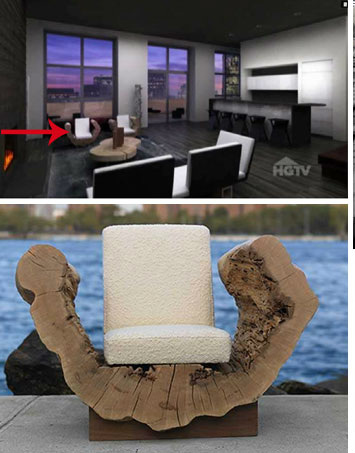
Does digitally adding recognizable pictures of the plaintiff’s furniture to an empty room in a TV show amount to trademark infringement? Answer: No. The plaintiff failed to allege or prove that the defendants competed in furniture design or marketing or that any member of the public would believe that the allegedly infringed  furniture pieces were designed or offered by defendants.

Wimpy Kid Stands Up to Zombie Kid

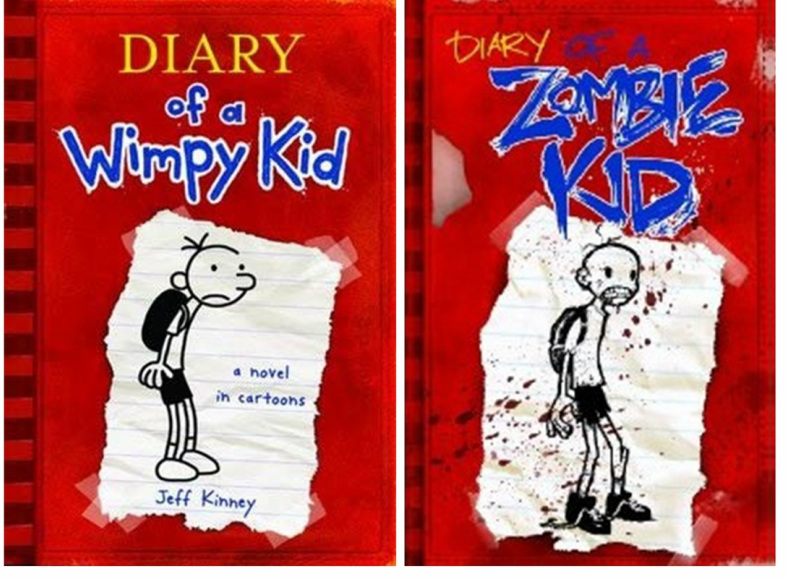
Wimpy Kid, Inc., the corporation that owns the trademarks and copyrights for the highly successful “Diary of a Wimpy Kid” series (“DOAWK”) filed suit in Massachusetts this week against Antarctic Press, a Texas company that is publishing a series called “Diary of a Zombie Kid.” Wimpy Kid’s complaint alleges trademark, trade dress, and copyright infringement, among other claims. Wimpy Kid is owned by Jeff Kinney, the author of the successful DOAWK series about a hapless kid surviving middle school. Over fifty-two million copies of the books have been sold in North America and each climbed to the top of the New York Times Bestseller list. Wimpy Kid has parlayed the success of the books into other branded merchandise, including clothing, toys, games, puzzles, and card games. The DOAWK series has also spawned two successful major motion pictures, which together have grossed more than $115 million in the United States alone. In addition to the six books in the series, Wimpy Kid and its publisher has written and marketed two editions of a book that accompanies the movies and two editions of a DOAWK themed do-it-yourself guide.

Antarctic Press published its book “Diary of a Zombie Kid” on or about August of 2011, which chronicles the misadventures of a middle schooler with a “zombie virus,” and is selling it nationwide through major retailers like Barnes and Nobles and Amazon.com. “Diary of a Zombie Kid” has also transported (or whatever zombies do) itself onto the New York Times bestseller list. According to Wimpy Kid, Antarctic Press has intentionally designed and titled its book, “Diary of a Zombie Kid” so that it looks just like the “Diary of a Wimpy Kid” series and consumers will be confused into thinking it is simply the latest offering from Wimpy Kid, Inc. The covers and spines of both series use similar colors, type styles, hand-drawn characters, and other artistic elements and, I have to admit, look a whole lot alike. Having had three kids that have loved the DOAWK series and having picked up these books lying around my house for the last five years or so, I am something of an lay expert on what they look like. In my admittedly unscientific poll of my children, they found the two covers to be confusingly close and said they would have assumed that Jeff Kinney wrote the zombie book too. No doubt the Zombie folks will counter with a parody defense and it remains to be seen if this will fly but the Wimpy Kid has made a pretty good opening salvo.

Anatomy of a Business Divorce– When the Dream Unravels, Who Gets Custody of the IP ??

This cautionary tale is a scenario that I have seen over and over in my law practice. Two creative people meet and become friends, a business develops, something happens, things go south, the friendship sours, a business unravels and litigation ensues. In fact, it happens so often, I thought I would relay the fictional story of Jack and Rob, both to lay out the legal issues that come up in the dissolution of a business and to provide some advice as to what they could have done differently.  If “Jack” were a real person, he would have relayed something like this sad (and completely avoidable) tale over a cup of lukewarm coffee at my office. Here’s Jack’s story:

Jack:   My old college roommate Rob and I started a website selling t-shirts with funny political slogans on them. I came up with the slogans and ideas for the cartoons that would go with each slogan. Rob is a talented artist so he would draw the designs. The business is called “Politically Speaking.” I came up with that name and trademarked it with me as the owner. I have also trademarked several of the names of our most popular shirts in my name as well, which Rob didn’t know about.  I paid for all of the trademarks with my own money and obtained them in my own name—well, rather I used the business’ checking account to pay the filing fees but paid it back with my own money. I am the tech-savvy guy so I created the website, wrote all the copy on it, and created a political blog to promote it. Rob did create some artwork and photography for the website and photographed the products. We were doing pretty well with this business and were both making a good living from it. We have a huge window of opportunity coming up with the 2012 presidential election and expected to grow the business about 25% over the next two years.

Even though we used to be best friends, we have now had a big falling out over our political differences. At first it didn’t bother me but now it really gets on my nerves. He’s an Obama supporter and I like Ron Paul (who Rob constantly ridicules). I also found out that Rob had used company funds to make a pretty big Obama donation without my knowledge or permission (at least I think it’s big–$2,500). I am furious about the donation and he is mad at me because he found out that I obtained the trademarks in my own name without telling him about it. We can’t get past our problems, have grown to hate each other and can’t possibly stay in business together. He says he owns our products because he designed them artistically. I say he doesn’t because I came up with the basic idea of each shirt, he just executed my ideas. I own the domain name for the website and I have all the passwords to access the site, including the emails that come in. I also maintain our customer list in a database that I created and maintain. I say the trademarks, website, database, and customer list are mine but he says it isn’t because his art work is used throughout the website and he designed the logos.

Because we used to be such good friends, we never had a lawyer draw up any contracts to control the operation of our business or anything like that so I say it’s every man for himself. While I’m willing to pay him half of the profit I make from selling off existing inventory and maybe a little something for the artwork on my website, I don’t think I have any further obligation to him after that. I want to lock him out of the website this weekend. Can I do that?

Me: Before I give you an answer on whether or not you can lock Rob out of the website, let me give you some ground rules that will control how this messy situation should be sorted out. First of all, even though there are no written agreements, it is not simply every man for himself. Whether you realized it or not, you and Rob most likely have formed an implied or de facto partnership and most states have a statute that controls how things should go when two business partners get “divorced.” While it will depend on your state’s particular partnership act and could be changed by facts unique to a particular situation, in general terms, the partners are deemed to own the partnership property on a pro rata basis; meaning, if you’ve got two partners, they own the partnership property on a 50/50 basis. And, when two partners dissolve the partnership, they take the partnership’s money and property and put it in a big basket, pay off any debts that the partnership has incurred, and split the value of what’s left.

So, the next question is: what makes up the partnership property in this partnership? Although you might not like this answer, I think that most of the items you’ve discussed here– the existing inventory, the trademarks, the website, the blog, the customer list, and the data base containing those names, likely constitute partnership property. As I’ll get to in a minute, the shirt designs may or may not be partnership property. If the designs aren’t partnership property, they more likely belong to Rob than to you.  Let’s address each of these one by one:

The Existing Inventory

I think there is little doubt that the existing product inventory belongs to the partnership. The purpose of your de facto partnership was to sell these shirts and most courts would find that in the absence of an agreement to the contrary, the shirts that you and Rob had manufactured and are currently selling are partnership property.

The Shirt Designs

The designs of these shirts would be protected by copyright law and we would have to look there to determine their ownership. From your description, it sounds like there is at least an argument that these designs were jointly created. You came up with the overall concept and the slogan and Rob contributed the design. Although, I must tell you that there is also a real possibility that the part you contributed may not be copyrightable, because ideas, short phrases, and titles generally aren’t copyrightable. So, depending on the particular facts of your contribution, you may or may not have jointly created the designs. If you jointly own the copyright, this piece of the puzzle is fairly straightforward because it would be simple to conclude that the partnership owns the joint copyright. If the part that you contributed is not copyrightable, the copyright would be owned by Rob alone. Is the copyright partnership property? While you might think the answer is automatically “yes,” based on the reasoning we applied to the inventory question above, the answer is more likely “no.” Ownership of a copyright can only be transferred in writing. This means that in the absence of a written assignment agreement (or even an informal email) evidencing Rob’s transference of the copyright to the partnership, he likely owns it rather than the partnership. While this sounds bad for you, at least you can argue that the partnership has an license to use the designs, but even this is a gray area.

The Trademarks

Not surprisingly, trademark law controls the ownership of the trademarks. While you obtained federal registrations for the marks and paid for those registrations, you may not own them by yourself. First of all, to obtain a trademark, you had to sign a sworn declaration that certified to the United States Patent and Trademark Office (the “USPTO”) that no one else had any right to the trademark other than you. That statement wasn’t necessarily true because you personally were not the one making use of the marks in commerce–the partnership was the entity using the marks. The partnership (and/or Rob) would have a decent argument that you breached your fiduciary duty to the partnership when you took the marks that it was using and secured them for yourself, possibly perjuring yourself before the USPTO to do so. While there are certainly circumstances that would justify one partner actually owning the marks and orally licensing them back to the partnership, since you did this without Rob’s knowledge, you would have a very difficult time establishing that as the case here. I believe its very likely that a court would ultimately determine that the trademarks belong to the partnership because it was the one actually using them in commerce. If this is the case, you would be entitled to treat your footing of the bill to obtain the registrations as either a partnership capital contribution or it could be treated as a debt to you personally from the partnership. At any rate, you probably don’t own these trademarks in your individual name.

While it is not a good fact that Jack snuck off and registered these trademarks without Rob’s knowledge, Rob is not entirely without fault either. It was likely a breach of Rob’s fiduciary obligation as well to make a political donation with company funds without Jack’s knowledge or permission.

The Website, Blog and Domain Name

Many of these same issues are at play as we determine the ownership of the website. Like the shirt designs, the content of the website would most likely be subject to copyright law. (We’ll assume for the purposes of this question that there is nothing patentable about the content on the website). You created the written content as well as the layout and structure of the website and blog. Because you are the one who shepherded the “idea” of the website and blog into a tangible, written form, you should own them, right? Not so fast. Rob has also contributed copyrightable matter like artwork and photography to the website, which gives him a copyrightable interest in it as well. It looks like you two might jointly own the website and blog.

I realize that you own the domain name and whether it is partnership property will depend on a factual analysis of the entire situation. Whether a court would deem the domain name itself to be partnership property, as distinct from the contents of the website, is something of an open question that can’t be definitively answered without more information. Did you purchase the domain name before or after the partnership was formed, did you purchase it using partnership funds? Did Rob know that you were purchasing it in your individual capacity:? Does the domain name contain the partnership’s trademarks? A court would analyze all of these factors to determine whether the domain name really belongs to you or the partnership.

The Customer Names and the Database in Which They Are Housed

The customer list almost certainly belongs to the partnership. These customers were acquired in the performance of the partnership’s business–selling shirts emblazoned with political cartoons and slogans. The customer list is an asset of the partnership and possibly even a trade secret of the partnership.

As for the database, if you created this database yourself and there is something sufficiently unique about the arrangement of the factual elements in the data base or you programmed code that runs the database, you could have a copyrightable interest in the database and/or the applicable software. If you own the copyrightable interest in the data base, it would probably not be partnership property absent a written assignment transferring that interest back to the partnership. If a court determines that you own a copyright interest in the database, the court could still determine that the partnership has an irrevocable implied license to use the database.

Bottom Line: Unless you have some evidence that Rob intends to get into the website and damage it in some way, do not lock him out. He is a joint owner of the website with you so you don’t have the right to lock him out and you would probably have liability for that act if litigation ensues. This brings me to my next point. Avoid litigation. I know that you are very angry with Rob but it is not in either of your best interest to litigate about these issues. Now that you know the basic lay of the land, you and Rob should sit down and come up with a fair and equitable way to divide these assets between you. Litigating over these issues will likely deplete whatever assets are left and jeopardize the ability of either of you to start over with a new venture. Work something out that is equitable, recognizing that neither of you will be entirely happy with the outcome. I can assure you that you won’t be entirely happy with what a judge decides either but at least you won’t have spend tens, if not hundreds, of thousands of dollars to get to the point of a decision that still doesn’t give you everything you want.

What Jack and Rob Should Have Done Differently

1.    First and foremost, Jack and Rob needed a written partnership agreement or, better yet, they should have formed an entity that gave them even more protection than a partnership would. Always seek legal advice from a good lawyer on the formation of a new venture to determine the business form that is most appropriate for what you are doing.

2.    The agreement should explicitly set out who owns what if it is different than pro rata joint ownership.

3.     The agreement should set out who is to do what work and how it is to be done so that there are no resentments spawned by the all too familiar martyr complex–i.e., “It’s not fair! I’m the one doing all the work!”

4.    The agreement should make clear that all intellectual property created before the formation of the legal entity is transferred from the individual to the legal entity. If this is not the intent of the people involved, at the very least the entity should have a license to use the property that sufficiently protects its ability to do business using the IP. The corporate entity and the individual transferring or licensing the IP should have separate legal counsel to ensure that an arm’s length transaction occurs.

5.         All creative work—the design of the shirts, the design of the website, the content of the website, the design and content of the blog, the design and content of the data base—should have been done pursuant to a work-for-hire agreement. A work-for-hire agreement makes it clear that the business entity, and not the individual doing the work (or any alterations to the work) owns the resulting copyright in the creative work  This is absolutely critical to a business based on intellectual property. You can head off years of expensive litigation and legal fees if you take this simple step on the front end of every project that will result in the creation or alteration of intellectual property.

6.         Don’t sneak off and do things behind your business partner’s back. This almost always will result in bad will and damage the relationship. The corollary to this rule is don’t go into business with someone that you don’t trust implicitly. Trust your gut instincts as to the character of your potential business partner. If anything gives you pause as to his or her integrity, walk away.

7.         The agreement should contain a roadmap that sets out how the entity will be dissolved and the property divided in the event that things don’t work out.

Greece and Macedonia Squabbling Over What Name Greece Calls Macedonia

You would think that Greece has bigger things to worry about but there is a lawsuit at the UN’s International Court of Justice (“ICJ”) stemming from the fact that Greece refuses to call Macedonia by the “correct” name. Macedonia claims that Greece broke an agreement between the two nations by blocking Macedonia’s entrance under its UN name into NATO and other international organizations. Macedonia’s UN or official name is “the former Yugoslav Republic of Macedonia.” Because Greece has its own province called “Macedonia,” it doesn’t want to recognize this name and instead calls Macedonia “TFYRM, ” an acronym for the official name. In a decision that came out of the ICJ this week, the UN agreed with Macedonia in the case but declined to order Greece to use the name and honor the earlier agreement. This dispute reminds me of many the argument I have mediated among my children….”He keeps calling me X!”

Apple Loses Right to Use iPad Name in China

Picture Apple Inc. lost an crucial bid in a Chinese court yesterday to reclaim its iPad name from a Chinese manufacturer who registered the iPad trademark in mainland China in 2001. The Municipal Intermediate People’s Court in Shenzhen rebuffed Apple’s claims that Hong Kong-based Proview Technology Shenzhen had infringed its iPad trademark, which Apple contends that it bought from Proview’s Taipei division in 2009, Xinhua News reported. The Chinese court held that there was no valid transfer of the name in China and that Proview, a unit of Hong Kong-based Proview International Holdings Ltd., lawfully registered the trademark in 2001 and continues to have the right to use it in mainland China. Oviously this is a significant blow because Apple views China as a critical market.

The iPad brand is having a bad run of luck. On December 2, 2011, a California judge refused to enjoin Samsung Electronics Co. Ltd. from selling touch-screen smartphones and tablets even though she found the devices may violate design and utility patents for Apple’s iPhone and iPad. Despite the fact that U.S. District Judge Lucy Koh held that Apple was likely to prevail on its patent infringement claims against Samsung’s Galaxy S 4G, Infuse 4G and Droid Charge phones and its Galaxy Tab 10.1 tablet, Apple was not able to convince her that it would suffer irreparable harm from the alleged infringement.

Yahoo Wins Victory Over Spammers Using its Trademarks

Yahoo won a $610 million default judgment against Nigerian, Taiwanese, and Thai fraudsters in New York federal court on Monday. Yahoo went after spammers who used the Yahoo marks to flim-flam its e-mail account holders with emails that falsely informed the recipient that he or she had won a lottery but needed to pay a fee to claim his or her winnings (the so-called advance fee scam). The scammers would then use the emails to solicit personal information from the people that responded— names, addresses, phone numbers, bank account numbers — and then use the information to run a wide range of credit and identity cons, according to the opinion. The judge  awarded statutory damages of $27 million under the U.S. Trademark Act and $583,039,500 under the Controlling the Assault of Non-Solicited Pornography and Marketing Act of 2003 (also known as CAN-SPAM). While this judgement will likely be impossible to collect, Yahoo viewed this as an opportunity to send a message to spammers and criminals that it would not allow its customers to be defrauded and taken advantage of using its marks, according to Yahoo attorney Robert Weisbein, of Foley & Lardner.

I have long been fascinated by the folks who fall for these scams, even Chelsea Clinton’s father-in-law, a former US congressman, supposedly got taken in by every Nigerian scam available and his involvement with them landed him a seven-year prison sentence for fraud. It is satisfying to see that these crooks are suffering some sort of consequences, hollow though they may turn out to be. You may still receive the occasional email from the exiled Nigerian prince that needs you to help him move $20 million or so out of the country, but Yahoo made it a little less likely that he will use their trademarks to do so.

Bits and Bytes

Bob Marley’s wife and kids sue his brother for trademark infringement.

House Intelligence Committee Passes Cybersecurity Bill.

Bipartisan lawmakers think ITC should be in charge of fighting internet piracy.

Is entrepreneurship only for the young? I don’t think so. I think it takes the experience of one or more failures to make success more possible.

Jeff Cornwall of Belmont: End of a business is no failure if entrepreneurs learn lessons.

Has Facebook become the modern equivalent of newspaper clippings sent by your parents?

The ABA gets a little closer to allowing non-lawyers to have an ownership interest in law firms. The reason? Some folks believe it would be easier for firms to recruit top IT and marketing leaders if they could offer an ownership stake.