 This cautionary tale is a scenario that I have seen over and over in my law practice. Two creative people meet and become friends, a business develops, something happens, things go south, the friendship sours, a business unravels and litigation ensues. In fact, it happens so often, I thought I would relay the fictional story of Jack and Rob, both to lay out the legal issues that come up in the dissolution of a business and to provide some advice as to what they could have done differently. If “Jack” were a real person, he would have relayed something like this sad (and completely avoidable) tale over a cup of lukewarm coffee at my office. Here’s Jack’s story:
Jack: My old college roommate Rob and I started a website selling t-shirts with funny political slogans on them. I came up with the slogans and ideas for the cartoons that would go with each slogan. Rob is a talented artist so he would draw the designs. The business is called “Politically Speaking.” I came up with that name and trademarked it with me as the owner. I have also trademarked several of the names of our most popular shirts in my name as well, which Rob didn’t know about. I paid for all of the trademarks with my own money and obtained them in my own name—well, rather I used the business’ checking account to pay the filing fees but paid it back with my own money. I am the tech-savvy guy so I created the website, wrote all the copy on it, and created a political blog to promote it. Rob did create some artwork and photography for the website and photographed the products. We were doing pretty well with this business and were both making a good living from it. We have a huge window of opportunity coming up with the 2012 presidential election and expected to grow the business about 25% over the next two years.
Even though we used to be best friends, we have now had a big falling out over our political differences. At first it didn’t bother me but now it really gets on my nerves. He’s an Obama supporter and I like Ron Paul (who Rob constantly ridicules). I also found out that Rob had used company funds to make a pretty big Obama donation without my knowledge or permission (at least I think it’s big–$2,500). I am furious about the donation and he is mad at me because he found out that I obtained the trademarks in my own name without telling him about it. We can’t get past our problems, have grown to hate each other and can’t possibly stay in business together. He says he owns our products because he designed them artistically. I say he doesn’t because I came up with the basic idea of each shirt, he just executed my ideas. I own the domain name for the website and I have all the passwords to access the site, including the emails that come in. I also maintain our customer list in a database that I created and maintain. I say the trademarks, website, database, and customer list are mine but he says it isn’t because his art work is used throughout the website and he designed the logos.
Because we used to be such good friends, we never had a lawyer draw up any contracts to control the operation of our business or anything like that so I say it’s every man for himself. While I’m willing to pay him half of the profit I make from selling off existing inventory and maybe a little something for the artwork on my website, I don’t think I have any further obligation to him after that. I want to lock him out of the website this weekend. Can I do that?
Me: Before I give you an answer on whether or not you can lock Rob out of the website, let me give you some ground rules that will control how this messy situation should be sorted out. First of all, even though there are no written agreements, it is not simply every man for himself. Whether you realized it or not, you and Rob most likely have formed an implied or de facto partnership and most states have a statute that controls how things should go when two business partners get “divorced.” While it will depend on your state’s particular partnership act and could be changed by facts unique to a particular situation, in general terms, the partners are deemed to own the partnership property on a pro rata basis; meaning, if you’ve got two partners, they own the partnership property on a 50/50 basis. And, when two partners dissolve the partnership, they take the partnership’s money and property and put it in a big basket, pay off any debts that the partnership has incurred, and split the value of what’s left.
So, the next question is: what makes up the partnership property in this partnership? Although you might not like this answer, I think that most of the items you’ve discussed here– the existing inventory, the trademarks, the website, the blog, the customer list, and the data base containing those names, likely constitute partnership property. As I’ll get to in a minute, the shirt designs may or may not be partnership property. If the designs aren’t partnership property, they more likely belong to Rob than to you. Let’s address each of these one by one:
The Existing Inventory
I think there is little doubt that the existing product inventory belongs to the partnership. The purpose of your de facto partnership was to sell these shirts and most courts would find that in the absence of an agreement to the contrary, the shirts that you and Rob had manufactured and are currently selling are partnership property.
The Shirt Designs
The designs of these shirts would be protected by copyright law and we would have to look there to determine their ownership. From your description, it sounds like there is at least an argument that these designs were jointly created. You came up with the overall concept and the slogan and Rob contributed the design. Although, I must tell you that there is also a real possibility that the part you contributed may not be copyrightable, because ideas, short phrases, and titles generally aren’t copyrightable. So, depending on the particular facts of your contribution, you may or may not have jointly created the designs. If you jointly own the copyright, this piece of the puzzle is fairly straightforward because it would be simple to conclude that the partnership owns the joint copyright. If the part that you contributed is not copyrightable, the copyright would be owned by Rob alone. Is the copyright partnership property? While you might think the answer is automatically “yes,” based on the reasoning we applied to the inventory question above, the answer is more likely “no.” Ownership of a copyright can only be transferred in writing. This means that in the absence of a written assignment agreement (or even an informal email) evidencing Rob’s transference of the copyright to the partnership, he likely owns it rather than the partnership. While this sounds bad for you, at least you can argue that the partnership has an license to use the designs, but even this is a gray area.
The Trademarks
Not surprisingly, trademark law controls the ownership of the trademarks. While you obtained federal registrations for the marks and paid for those registrations, you may not own them by yourself. First of all, to obtain a trademark, you had to sign a sworn declaration that certified to the United States Patent and Trademark Office (the “USPTO”) that no one else had any right to the trademark other than you. That statement wasn’t necessarily true because you personally were not the one making use of the marks in commerce–the partnership was the entity using the marks. The partnership (and/or Rob) would have a decent argument that you breached your fiduciary duty to the partnership when you took the marks that it was using and secured them for yourself, possibly perjuring yourself before the USPTO to do so. While there are certainly circumstances that would justify one partner actually owning the marks and orally licensing them back to the partnership, since you did this without Rob’s knowledge, you would have a very difficult time establishing that as the case here. I believe its very likely that a court would ultimately determine that the trademarks belong to the partnership because it was the one actually using them in commerce. If this is the case, you would be entitled to treat your footing of the bill to obtain the registrations as either a partnership capital contribution or it could be treated as a debt to you personally from the partnership. At any rate, you probably don’t own these trademarks in your individual name.
While it is not a good fact that Jack snuck off and registered these trademarks without Rob’s knowledge, Rob is not entirely without fault either. It was likely a breach of Rob’s fiduciary obligation as well to make a political donation with company funds without Jack’s knowledge or permission.
The Website, Blog and Domain Name
Many of these same issues are at play as we determine the ownership of the website. Like the shirt designs, the content of the website would most likely be subject to copyright law. (We’ll assume for the purposes of this question that there is nothing patentable about the content on the website). You created the written content as well as the layout and structure of the website and blog. Because you are the one who shepherded the “idea” of the website and blog into a tangible, written form, you should own them, right? Not so fast. Rob has also contributed copyrightable matter like artwork and photography to the website, which gives him a copyrightable interest in it as well. It looks like you two might jointly own the website and blog.
I realize that you own the domain name and whether it is partnership property will depend on a factual analysis of the entire situation. Whether a court would deem the domain name itself to be partnership property, as distinct from the contents of the website, is something of an open question that can’t be definitively answered without more information. Did you purchase the domain name before or after the partnership was formed, did you purchase it using partnership funds? Did Rob know that you were purchasing it in your individual capacity:? Does the domain name contain the partnership’s trademarks? A court would analyze all of these factors to determine whether the domain name really belongs to you or the partnership.
The Customer Names and the Database in Which They Are Housed
The customer list almost certainly belongs to the partnership. These customers were acquired in the performance of the partnership’s business–selling shirts emblazoned with political cartoons and slogans. The customer list is an asset of the partnership and possibly even a trade secret of the partnership.
As for the database, if you created this database yourself and there is something sufficiently unique about the arrangement of the factual elements in the data base or you programmed code that runs the database, you could have a copyrightable interest in the database and/or the applicable software. If you own the copyrightable interest in the data base, it would probably not be partnership property absent a written assignment transferring that interest back to the partnership. If a court determines that you own a copyright interest in the database, the court could still determine that the partnership has an irrevocable implied license to use the database.
Bottom Line: Unless you have some evidence that Rob intends to get into the website and damage it in some way, do not lock him out. He is a joint owner of the website with you so you don’t have the right to lock him out and you would probably have liability for that act if litigation ensues. This brings me to my next point. Avoid litigation. I know that you are very angry with Rob but it is not in either of your best interest to litigate about these issues. Now that you know the basic lay of the land, you and Rob should sit down and come up with a fair and equitable way to divide these assets between you. Litigating over these issues will likely deplete whatever assets are left and jeopardize the ability of either of you to start over with a new venture. Work something out that is equitable, recognizing that neither of you will be entirely happy with the outcome. I can assure you that you won’t be entirely happy with what a judge decides either but at least you won’t have spend tens, if not hundreds, of thousands of dollars to get to the point of a decision that still doesn’t give you everything you want.
What Jack and Rob Should Have Done Differently
1. First and foremost, Jack and Rob needed a written partnership agreement or, better yet, they should have formed an entity that gave them even more protection than a partnership would. Always seek legal advice from a good lawyer on the formation of a new venture to determine the business form that is most appropriate for what you are doing.
2. The agreement should explicitly set out who owns what if it is different than pro rata joint ownership.
3. The agreement should set out who is to do what work and how it is to be done so that there are no resentments spawned by the all too familiar martyr complex–i.e., “It’s not fair! I’m the one doing all the work!”
4. The agreement should make clear that all intellectual property created before the formation of the legal entity is transferred from the individual to the legal entity. If this is not the intent of the people involved, at the very least the entity should have a license to use the property that sufficiently protects its ability to do business using the IP. The corporate entity and the individual transferring or licensing the IP should have separate legal counsel to ensure that an arm’s length transaction occurs.
5. All creative work—the design of the shirts, the design of the website, the content of the website, the design and content of the blog, the design and content of the data base—should have been done pursuant to a work-for-hire agreement. A work-for-hire agreement makes it clear that the business entity, and not the individual doing the work (or any alterations to the work) owns the resulting copyright in the creative work This is absolutely critical to a business based on intellectual property. You can head off years of expensive litigation and legal fees if you take this simple step on the front end of every project that will result in the creation or alteration of intellectual property.
6. Don’t sneak off and do things behind your business partner’s back. This almost always will result in bad will and damage the relationship. The corollary to this rule is don’t go into business with someone that you don’t trust implicitly. Trust your gut instincts as to the character of your potential business partner. If anything gives you pause as to his or her integrity, walk away.
7. The agreement should contain a roadmap that sets out how the entity will be dissolved and the property divided in the event that things don’t work out.

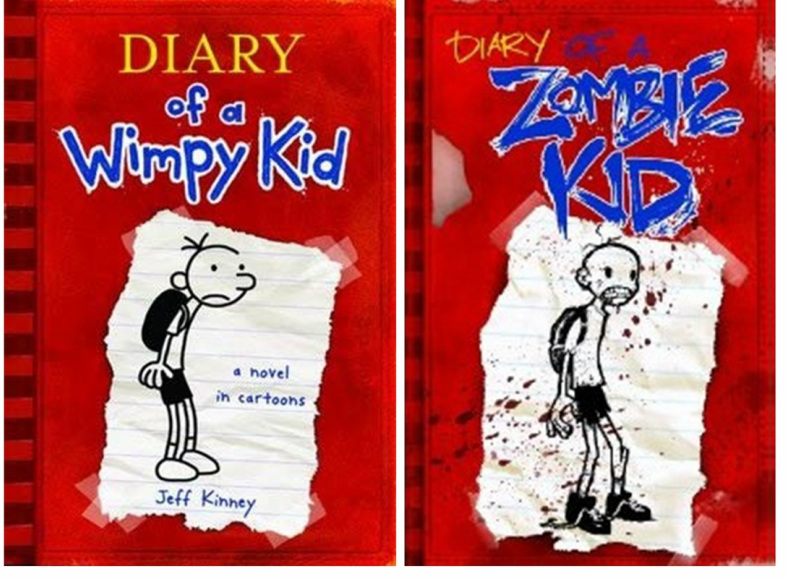 Wimpy Kid, Inc., the corporation that owns the trademarks and copyrights for the highly successful “Diary of a Wimpy Kid” series (“DOAWK”) filed suit in Massachusetts this week against Antarctic Press, a Texas company that is publishing a series called “Diary of a Zombie Kid.” Wimpy Kid’s complaint alleges trademark, trade dress, and copyright infringement, among other claims. Wimpy Kid is owned by Jeff Kinney, the author of the successful DOAWK series about a hapless kid surviving middle school. Over fifty-two million copies of the books have been sold in North America and each climbed to the top of the New York Times Bestseller list. Wimpy Kid has parlayed the success of the books into other branded merchandise, including clothing, toys, games, puzzles, and card games. The DOAWK series has also spawned two successful major motion pictures, which together have grossed more than $115 million in the United States alone. In addition to the six books in the series, Wimpy Kid and its publisher has written and marketed two editions of a book that accompanies the movies and two editions of a DOAWK themed do-it-yourself guide.




 paigemillsblog.com