Category Archives: Copyrights

Churches and Other Not-For-Profits Face Unique Issues When Determining Who Owns the Intellectual Property They Create

Churches and other not-for-profits are filled with creative people that are…well….creating. Ministers are writing sermons and books, music leaders are writing beautiful choruses, graphics people and web designers are illustrating messages and the website with fantastic and sophisticated creations. These items that are created as the organization fulfills its mission are works of intellectual property. Creative works like the ones described above are subject to copyright law. Who owns this intellectual property? The organization or the individual that created it?

Continue reading

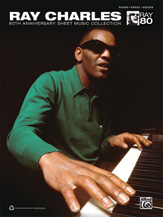
The Ray Charles Foundation sues Ray’s Children Over Copyrights

One of my all-time favorite singers is in the news this week. The Ray Charles Foundation, a charitable organization founded by Ray Charles to fund research and provide education relating to hearing loss, sued seven of Charles’ twelve children recently for allegedly breaching an agreement they made with their father regarding their rights to his musical compositions. According to the complaint, Mr. Charles gathered his children around him in December of 2002, Continue reading

Copyright Fair Use – Is it or Isn’t it?

As an intellectual property lawyer, I often get questions from clients that have received a cease and desist letter alleging copyright infringement. One important defense to copyright infringement is the “fair use” defense, in which you basically say, “Okay, I copied it, but the use I made of your copyrighted material was legal.” Fair use is a very fact-intensive analysis and you often can’t know whether something was actually fair use or not until a judge or jury makes such a determination after trial. Because most people cannot afford to go the distance to determine the viability of the defense, the defendant who has used the copyrighted material often settles or removes the offending material (if possible) rather than litigate. In order to avoid being accused of copyright infringement altogether, it is helpful to understand the rules of fair use, which are discussed very comprehensively  in this resource from the Stanford University Libraries. I have found it be very useful, particularly the summary of fair use cases in Part C. I have also written earlier on this topic, here and here. I hope you find these  resources to be useful guidance on this complicated and fact-intensive issue, which can otherwise be a complete roll of the dice. And, I hope you are never in the position of having to convince a mad copyright holder that your use was fair.

Joel and Victoria Osteen Win Dismissal in Copyright Infringement Case

Evangelists Joel and Victoria Osteen get a temporary reprieve in the copyright suit brought against them by writer of the song “Signaling Through the Flames,” courtesy of every defendant’s best friends, Twobley and Iqbal. The Texas district court granted their motion to dismiss because the plaintiffs failed to allege facts showing that the Osteens had a financial stake in the infringing activity and personally supervised the infringing conduct. The plaintiff was given leave to amend so the Osteens will undoubtedly have to face this issue again.

Top Five Ways to Protect Your Website

Below are the top five things to consider to ensure that your website and its content are adequately protected:

1.      Own Your Own Content

As a threshold matter, you need to create all the content yourself or, if it is created by others, it must be done pursuant to a “work for hire” agreement. If not, the person writing the content or providing the graphic or photographs owns the content, not you or      Continue reading

Another Cautionary Tale of Copyright Infringement: MergerMarket v. Cantor Fitzgerald

Here’s another case that points out the perils of copying and distributing content belonging to others. MergerMarket sued Cantor Fitzgerald and its managing director on Tuesday for copyright infringement. MergerMarket is a business news organization that provides its subscribers, mostly financial institutions, with the latest news and intelligence on mergers and acquisitions. According to MergerMarket’s Continue reading

The Velvet Underground vs. The Andy Warhol Foundation – Be Careful What You Wish For

Picture

The Andy Warhol Banana Image and the iPad cover licensed by the Foundation
The Velvet Underground ( an iconic rock group from the 1960’s for those of you who have never lived in a world without MTV) has filed a trademark and unfair competition lawsuit in Manhattan federal court against the Andy Warhol Foundation for the Visual Arts stemming from the Foundation’s use of the iconic banana image that was on the cover of the Velvet Underground’s 1967 debut album, The Velvet Underground and Nico. Band leaders Lou Reed and John Cale take the position that the foundation has illegally licensed the image for use on various products, including iPad cases. Cale and Reed allege that the foundation is trying to “deceive the public” into believing that the band, “VU,” has given its “sponsorship or approval” to this merchandise.The complaint seeks damages for trademark infringement and unfair competition and makes this statement to support its unfair competition claims: “Inasmuch as the Warhol Foundation has such a large number of Andy Warhol designs, all of which are presumably unique works that are highly valued in the marketplace, there would appear to be no economic need to include the banana design among the designs that defendant licenses.” In other words, since there are a lot of other Warhol designs the Foundation could choose to commercialize, the fact that it selected this particular one proves that the defendant is trading on the goodwill of the Velvet Underground.

Andy Warhol did more than paint Campbell soup cans and hang out with Edie Sedgwick during the 1960’s. He was also serving as the Velvet Underground’s manager and producer, and he created the famous banana logo – which includes the phrase “peel slowly and see” – from an advertisement taken from the public domain. Warhol was paid part of the band’s label advance for the design but never registered the image with the US Copyright Office. While this could theoretically mean that Warhol and now the Foundation have common law copyrights in the design, the Complaint denies that this is the case. The Velvet Underground says the Warhol Foundation lost any claim to the image by repeatedly publishing it without a copyright notice.

“The Warhol Foundation has sought to justify its unlawful licensing activities involving the mark by asserting that it has a copyright interest in the banana design, despite the incontrovertible fact that the banana design, insofar as copyright rights are concerned, is in the public domain,” the complaint states. “The banana design was first published in 1967, and continuously and repeatedly afterwards, without any copyright notice, and neither Andy Warhol, the Warhol Foundation, nor anyone else, has applied for registration of any copyright or deposited any sample of the work with the Copyright Office. Under the applicable copyright law – which is the Copyright Act in effect from July 1, 1909 through December 31, 1977 (the ‘1909 Act’) – such publication without a copyright notice irrevocably placed the banana design in the public domain, if it was not there already.”

In addition to seeking unspecified damages, the Plaintiff wants a declaratory judgment that the Foundation has no copyright in the Warhol image.

As far as I can tell, the Velvet Underground never obtained a federal trademark registration for the cover and the Complaint does not allege that they have. If that’s the case, they only have common law trademark rights. While you can certainly still sue under the Lanham Act without a registration, I have always believed that judges and juries are bound to wonder, “if this mark is so valuable, why didn’t you register it?” In other words, it makes it hard to convince folks that there is irreparable harm happening, in my humble opinion. Regardless of whether there is or is not a registration, the VU is going to have to establish that there is a likelihood of confusion with its marks and the usage the Foundation is making, i.e., on iPad covers. The complaint alleges that the VU mark has been used in connection with live musical performances, vodka, and VU merchandise. Consequently, I’m not sure how the VU is going to establish that it has rights that extend into the arena of iPad covers. Are consumers likely to believe that iPads emanate from the same source as live musical performances and vodka?  I would think not.

If the design is in the public domain, as the plaintiff alleges, can’t anyone use it on goods to which the plaintiff’s common law trademark does not extend? While I think the Velvet Underground will likely be able to establish trademark usage and secondary meaning in the album cover, I don’t think they are going to be able to extend it as far as they want it to go. If this is the case, it may be a mistake to seek a declaration that the Warhol banana design is in the public domain. If the plaintiff receives a holding that the image is in the public domain, then anyone would be able to use it on any product that would not be likely to be confused with live musical performances, vodka, and VU. At least if they are only fighting the Warhol Foundation, they know they are dealing with a reputable outfit that is likely to only license the mark on “appropriate” goods. And, the foundation would have the motive and means to police copyright infringements of it. If I were the VU, I would shudder to think what products this public domain “banana” with the possibly suggestive slogan “peel slowly and see” could be applied to in the event it is determined to be in the public domain and how much in legal fees it would take to constantly address that. Hey, people need something to sell on all those new .XXX domains.

The case is The Velvet Underground v. The Andy Warhol Foundation for the Visual Arts, 12-0201, U.S. District Court, Southern District of New York (Manhattan).

Copyrights and Copy Cats – A Paper Jam in Area B Is Not The Worst Thing That Can Happen To You

A publisher that sells educational materials has accused the Toledo Public School System of intentionally and willfully violating its copyright by either encouraging or allowing teachers to copy its training guides–supposedly verbatim–by transcribing them onto the school system’s computers then distributing thousands of them among the system’s teachers.

Align, Assess, Achieve LLC (“AAA”) sued the Toledo Ohio Public School System in Columbus Federal Court last Friday. AAA says the school district bought 10 copies of books in its series, Common Core: Clarifying Expectations for Teachers and Students, “apparently for the sole purpose of stealing and widely distributing the materials by having TPS teachers illegally transcribe these materials.”

AAA says that the books were sold pursuant to a license agreement, under which the school district was explicitly limited to using one “pacing guide” from the series for each kindergarten, first grade, and second grade math and English teacher. Despite these restrictions, the AAA determined in August of 2011 that the school system was not abiding by the license and, instead, “had engaged in massive infringement of the AAA copyrighted works.”

The complaint alleges as follows:  “Unbeknownst to AAA, TPS had engaged its teachers over the summer to take AAA copyrighted works and transcribe them – word for word – into electronic word processing documents. On information and belief, this massive copying of the AAA copyrighted works required numerous hours on behalf of TPS teachers and was done without any authorization by or knowledge of AAA.”

Obviously, these are merely allegations at this point. The school system has not had the chance to respond yet. However, this situation points out the need for everyone in your organization to understand the parameters of copyright and “fair use,” or, to put it another way, what you can copy and what you can’t. First rule of thumb: if it comes with a license, read the license and comply with it. If in doubt, don’t copy it. Second rule of thumb: if the license is unclear or there is no license, ask for permission before you copy. Don’t copy the work unless you have written permission to do so. Don’t assume that you can copy someone else’s work if you give them credit for it unless they have given you written permission to do so. In other words, giving attribution is not a defense to copyright infringement. Third, you may be able to copy portions of a copyrighted work (and in some rare cases, the whole work), assuming your copying would constitute fair use under the Copyright Act.

Generally, to qualify as fair use, you must be using the work for purposes of commentary, criticism, news reporting, and scholarly reports. While using portions of copyrighted works for educational use can sometimes qualify as fair use, the wholesale copying described in this complaint likely will not cut it, particularly when it destroys the commercial market for the product being sold. Despite what your brother-in-law told you, it is not true that the copying will automatically qualify as fair use if you use less than a certain percentage of the work or a specific number of words, or a certain number of musical notes–at least not under US law.  Whether a particular use qualifies as fair use depends on all the circumstances and, ultimately, can only be definitively decided by a federal court. I would encourage you and the entire Toledo School System to check out The U.S. Copyright Office’s Circular 21Reproductions of Copyrighted Works by Educators and Librarians. In addition, you can review this previous post for the big picture rules of fair use. While nobody wants to waste time reinventing the wheel, it sure beats being sued by an angry publisher seeking statutory damages and attorney fees in Ohio federal court.

Counterfeits: Louis Vuitton Sues Over Use of Fake Vuitton Luggage in ‘Hangover’ Film

LVMH Moet Hennessy Louis Vuitton SA (MC) sued Time Warner Inc. (TWX)’s Warner Brothers Entertainment unit for trademark infringement last week in New York federal court. Louis Vuitton, the famed luxury handbag and luggage maker, claims that a duffle bag used in the film “The Hangover: Part II”  was fake, despite the fact that Alan, the Zach Galifianakis character, refers to it as real. You can see a shot of Alan and his “Louis Vuitton” luggage here at the Clothes On Film blog. Louis Vuitton says that Alan’s “Careful, that’s a Louis Vuitton” line has become a popular catchphrase and that the movie has produced consumer confusion. Its lawsuit also claims that there has been gossip and Internet buzz about whether or not Alan’s bag is real.

But the complaint (posted in full here by Paid Content) alleges that the bag not genuine and is instead made by the Chinese American company Diophy, which Louis Vuitton is currently suing at the International Trade Commission in an attempt to prevent knock-off items from being sold in the U.S.

Vuitton states that it does authorize product placement in movies, but only with its permission and only with genuine products. According to Louis Vuitton, Warner is ignoring the general practice in the movie industry of clearing the use of a branded product with the brand owner.

In addition to an award of money damages, litigation costs and attorney fees, Louis Vuitton seeks an order barring the advertising, promotion and distribution of the film (as well as the destruction of all copies of the film) that contain any scenes with the allegedly infringing bag,

Despite being critically panned, the movie has certainly drawn a lot of litigation. In April, the tattoo artist who created Mike Tyson’s distinctive tattoo sued over the use of that design in the film. That case settled in June for undisclosed terms. In addition, an Australian stunt man who sustained physical injuries while filming a botched car chase scene also filed a suit against Warner Bros, as did a screenwriter who claimed his ideas were stolen and used in the movie’s script.

The duffle bag case is Louis Vuitton Malletier SA v. Warner Bros. Entertainment Inc., 1:11-cv-09436-ALC, U.S. District Court, Southern District of New York.

Hark! The Herald Angels Sing! (But Not Exactly How They Were Supposed To)

One of the things I love about my job is representing songwriters—the folks who serve as the creative engine of Music City. (A gratuitous aside: How do you get a songwriter’s attention in Nashville? A: “Hey, Waiter!”). Because I am attune to the problems songwriters face, i.e. pirating, infringement, illegal downloads, Spotify, the demise of the “album cut,” lousy tips, etc., I liked this story about one of the most prolific, most enduring songwriters of all time: Charles Wesley. If you’ve ever attended a protestant church or sang Christmas hymns, you are familiar with his work. In case his name doesn’t ring a bell, he is the writer of more than 6,000 songs (some say more than 8,000+), including such well-known hymns as “Christ the Lord is Risen Today!,” “Oh For A Thousand Tongues to Sing,” “Come Thou Long Expected Jesus,” and, probably most famously, “Hark the Herald Angels Sing.” Charles was also the brother of the founder of the Methodist church, John Wesley, and,despite his prolific songwriting, Charles was sometimes called “the forgotten Wesley.” Charles wrote his hymns as his method of teaching Christian doctrine to the poor and illiterate of his day.

At any rate, when Charles first wrote “Hark the Herald Angels Sing,” it was sung to the more somber tune of “Christ the Lord is Risen Today,” and instead of its iconic first verse, it went like this: “Hark! How all the Welkin Rings / Glory to the King of Kings.” But over time, many hands altered it so that morphed into something quite different than Wesley’s original vision for the song. George Whitefield, Wesley’s co-worker, changed the opening couplet to the one we sing today: “Hark! The Herald Angels Sing/ Glory to the Newborn King.” The second couplet was also rewritten and the tune was changed over the years, most notably by the English musician, William H. Cummings, who adopted a cantata composed by Felix Mendelssohn  to fit the lyrics of “Hark! The Herald Angels Sing,” thus turning Wesley’s more somber song into the joyous carol we sing today.

So what did Charles think of the fact that so many people changed his songs and lyrics, spawning derivative works that weren’t quite true to his original vision? We don’t know for sure but John Wesley wrote what could be considered a gentle but pointed cease and desist letter in the Preface to his 1780 Hymn Book (“A Collection of Hymns for the Use of the People called Methodists”):

And here I beg leave to mention a thought which has long been upon my mind, and which I should long ago have inserted in the public papers, had I not been unwilling to stir up a nest of hornets. Many gentlemen have done my brother and me (though without naming us) the honour to reprint many of our hymns. Now they are perfectly welcome so to do, provided they print them just as they are. But I desire they would not attempt to mend them ; for they really are not able. None of them is able to mend either the sense or the verse. Therefore, I must beg of them one of these two favours: either to let them stand just as they are, to take them for better for worse; or to add the true reading in the margin, or at the bottom of the page; that we may no longer be accountable either for the nonsense or for the doggerel of other men.

In other words, if you print our songs, give us credit and leave them alone….a sentiment not unlike that of many clients I represent today, although the songwriters I represent usually want a royalty and a co-pub deal as well. However, I wonder if we would still sing “Hark! The Herald Angels Sing” if Charles had been successful in keeping the song true to his more sedate vision. In effect, the “commercialization” of the song gave it a second wind that has allowed the song to endure more than 200 years, relaying the message of Christ’s birth to generation after generation. So raise a glass to Charles Wesley and to those infringing, derivative innovators that came after him as you sing your carols and celebrate this joyous season. I sure will. Happy holidays to you and yours.